
ENVIRONMENTAL SCORE
How the environmental performance of our products is calculated ?
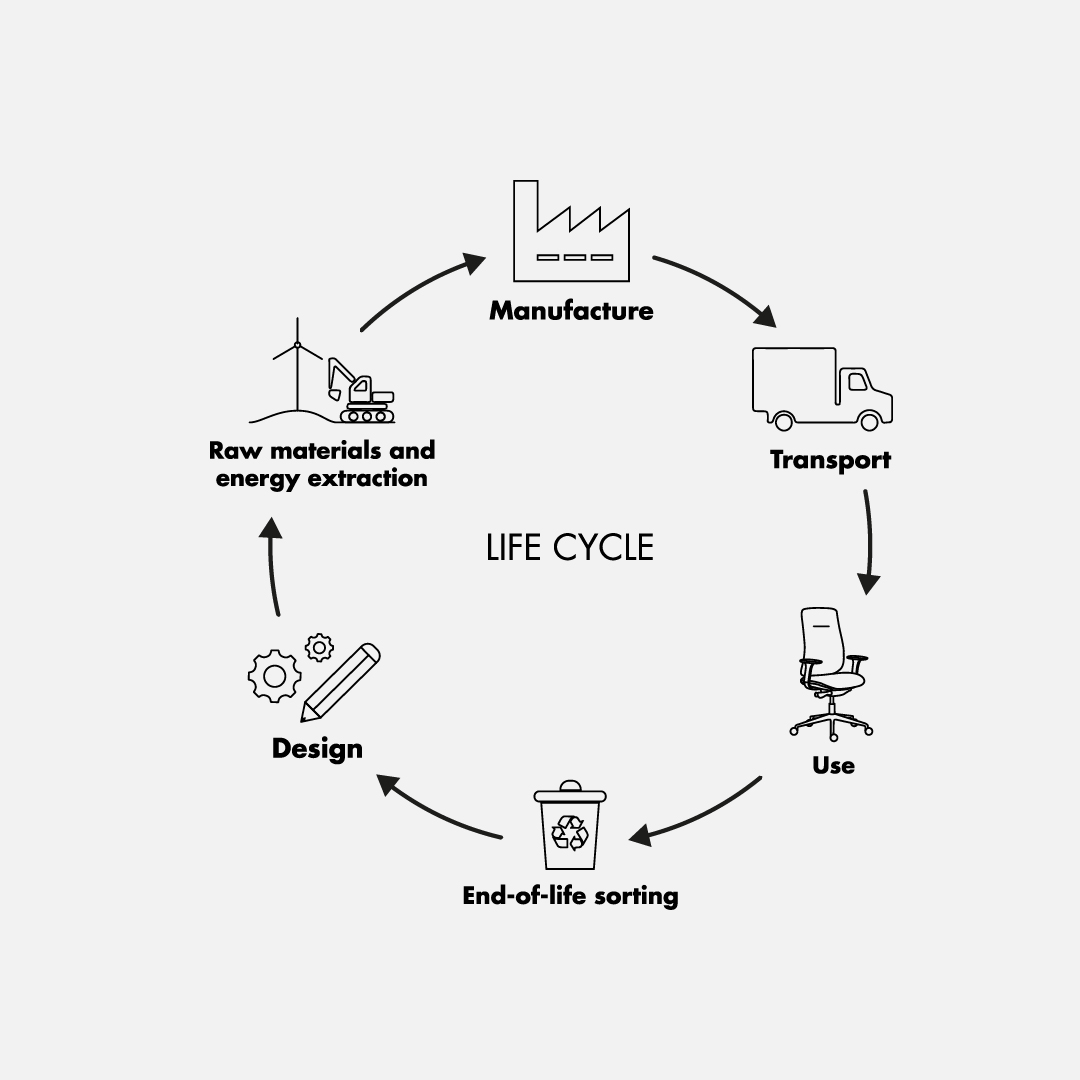
SOKOA has developed an internal tool for conducting Life Cycle Assessments (LCAs) and calculating the environmental performance of its products. This tool is based on an eco-design methodology developed by an external design office, which uses simplified life cycle assessments and French and European sectoral standards. This methodology has been externally validated by a third-party organisation: Le Pôle Éco-Conception de l'ADEME.
Scope of these LCAs: The LCA tool created for Sokoa is based on the product life cycle, covering raw materials, procurement, packaging, manufacturing, distribution and end of life. Assumptions made: The use phase is excluded from the study's scope, and packaging only includes distribution packaging.
Functional unit of these LCAs: One seat, 50 cm wide, used daily over the course of one year.
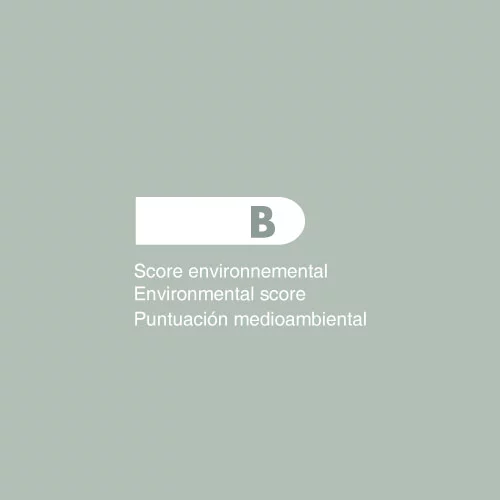
The environmental score
This is determined based on the PEF (Product Environmental Footprint) score, which considers 16 environmental factors and enables SOKOA products within the same category (operator chairs, visitor chairs and soft seating) to be compared with each other. The rating ranges from A to E; chairs classified as A have the lowest environmental impact.
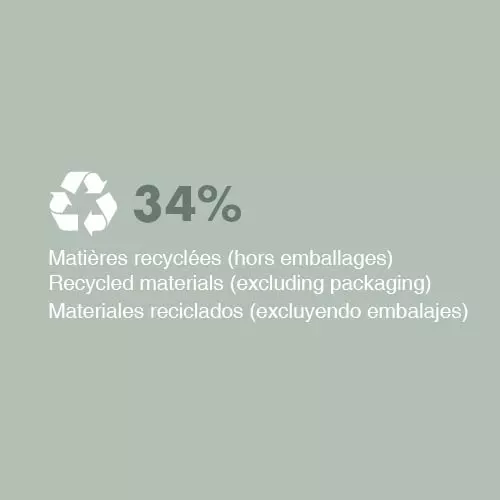
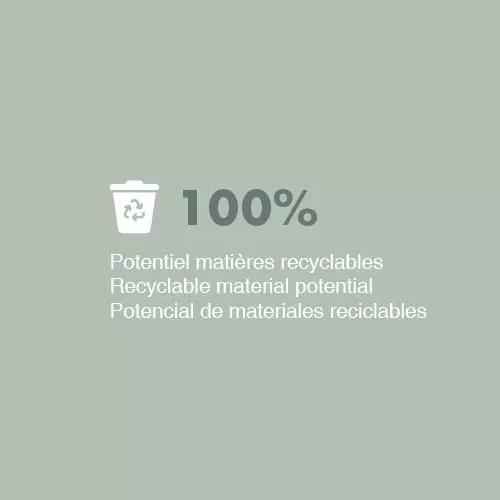
Distribution of Carbon Footprint across the Life Cycle
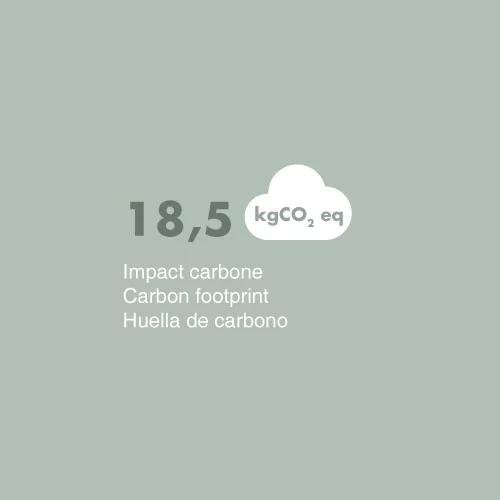
This refers to the assessment and breakdown of greenhouse gas emissions (expressed in CO₂ equivalents) generated by a product throughout its life cycle. It enables the identification of which stages of the life cycle are the most emissions-intensive, allowing for the targeting of reduction actions.

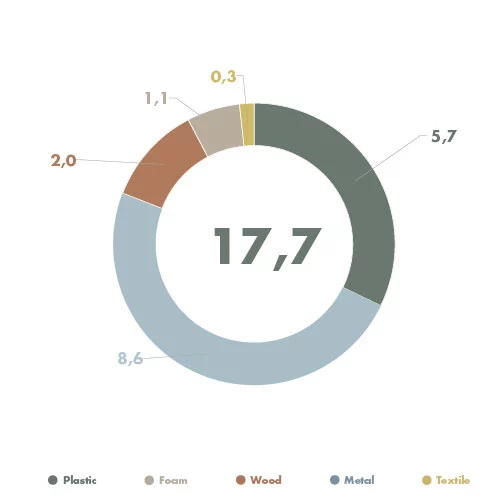
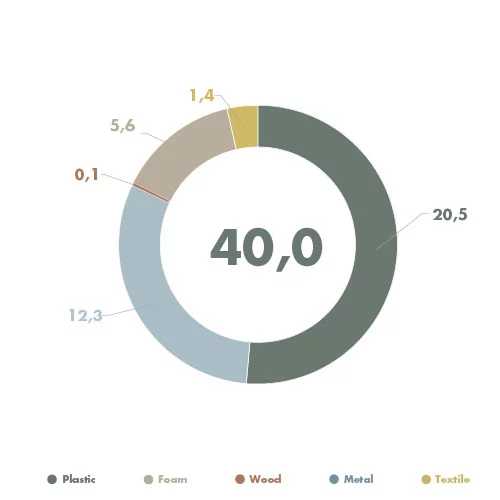
Carbon Footprint Distribution
This refers to the breakdown of greenhouse gas emissions generated by the product according to the different materials it is made of. Each material family (plastic, metal, glass, textile, etc.) is assigned a share of emissions, expressed in kilograms of CO₂ equivalent, proportional to its weight and specific environmental impact.
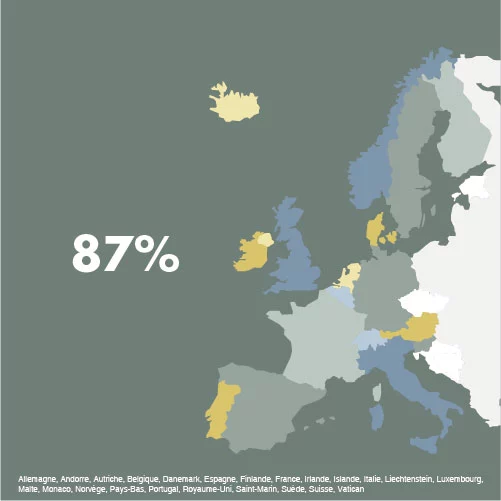
Location index
This corresponds to the percentage of the product's mass that originates in Western Europe, as defined by UNESCO. This definition covers 23 countries: Andorra, Austria, Belgium, Denmark, Finland, France, Germany, Iceland, Ireland, Italy, Liechtenstein, Luxembourg, Malta, the Netherlands, Norway, Portugal, San Marino, Spain, Sweden, Switzerland, the United Kingdom and Vatican City.